

“Black peel” does not identify one standardized formula: it can mean a carbon suspension treated with a Q-switched 1064-nm Nd:YAG laser or a dark-colored chemical peel. By checking the ingredients, acid concentration, device wavelength, treatment steps and clinical limits, you can decide whether it suits your acne, oiliness, skin tone and treatment history.
Key takeaways
- Ask which black peel formula and laser wavelength the clinic uses.
- Expect temporary oil reduction, smoother texture, and less visible pore congestion.
- Do not use a black peel to replace treatment for severe or cystic acne.
- Get a skin assessment first if you use isotretinoin or have irritated skin.
Black Peel Can Mean Two Different Treatments
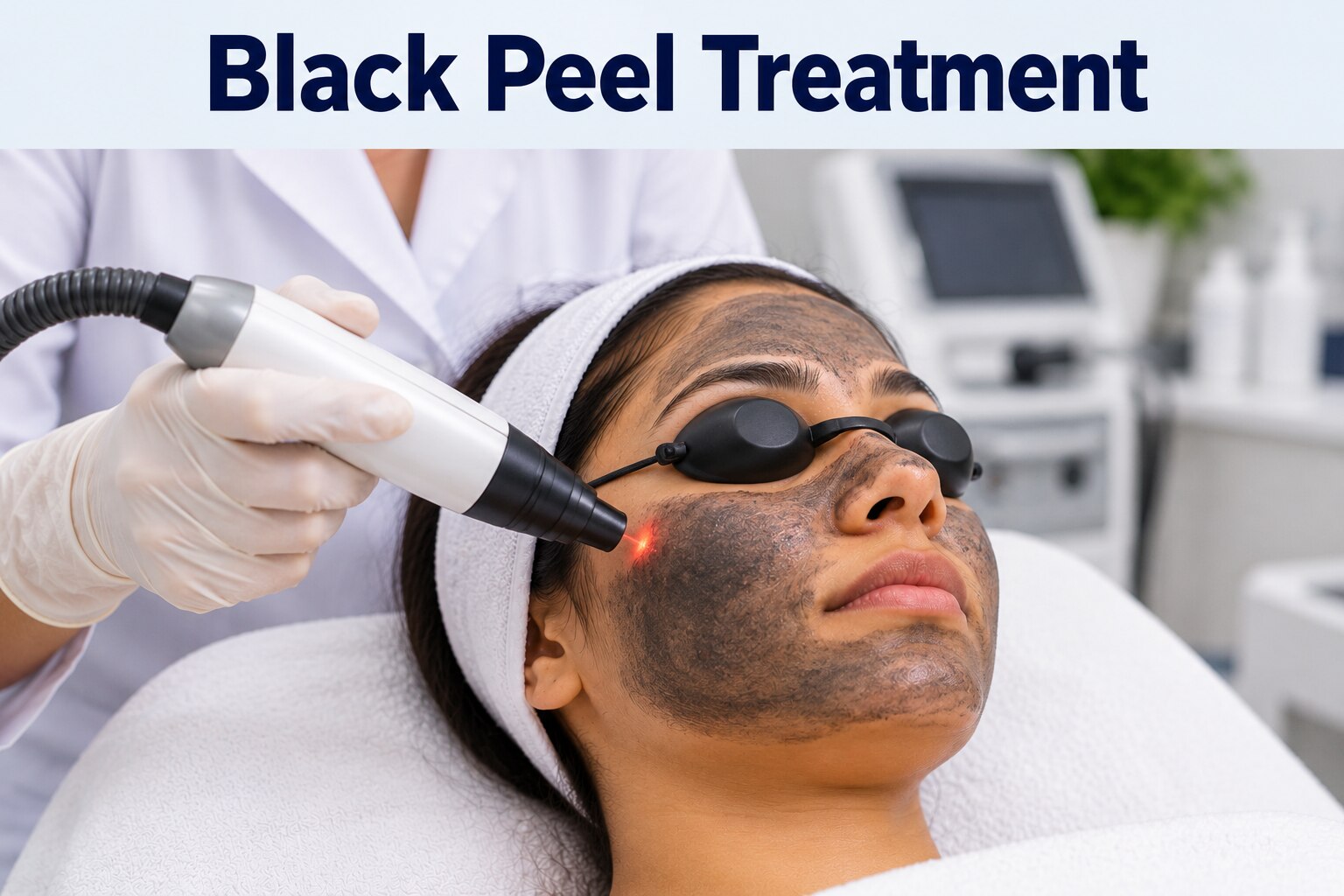
“Black Peel” is not an internationally standardized treatment name. What is Black Peel treatment, then? In many clinics, it means a carbon laser peel: a dark carbon lotion is spread over the skin, allowed to dry, and treated with a Q-switched 1064-nm Nd:YAG laser.
The laser disrupts or vaporizes carbon on the surface and inside follicular openings, creating superficial exfoliation and non-ablative heat.
Other clinics use “Black Peel” for a leave-on chemical peel with a dark-coloured formula. That procedure relies on controlled acid injury, not laser energy. Before booking, ask for:
- The product name and format, such as carbon suspension, gel, or liquid peel
- The active ingredient or ingredients
- The chemical peel ingredients and concentration, including the acid percentage
- The laser wavelength, if a device will be used
- The removal, neutralisation, and aftercare instructions
| Carbon laser peel | Carbon lotion plus Q-switched 1064-nm Nd:YAG laser; superficial and non-ablative | Carbon is dried, then targeted with laser passes; it is not CO2 resurfacing |
|---|---|---|
| Chemical peel | Acid formula applied for a specified time; causes controlled chemical exfoliation | The clinician removes or neutralises it according to the product instructions |
| CO2 laser resurfacing | Carbon dioxide laser intentionally vaporizes columns or layers of skin | Greater downtime and complication potential, including burns, infection, scarring, and pigment changes |
What Happens During a Black Peel Appointment
A Black Peel procedure starts with an assessment of the skin and confirmation of which treatment you booked. The clinician removes makeup, sunscreen and oil, then degreases the skin when the protocol requires it.
1. For a carbon laser peel, the clinician spreads a carbon suspension, often called a carbon mask, over the treatment area and allows it to dry fully. The patient and staff wear eyewear matched to the laser wavelength.
2. The clinician makes controlled laser passes over the dried carbon. The laser targets and disrupts the carbon at the skin surface and follicular openings. A true carbon laser peel does not use acid neutralisation.
3. For a chemical Black Peel, the clinician follows the product’s stated application time, removal or neutralisation method, rinsing instructions and eye-area precautions. Chemical peel neutralisation is product-specific, so do not assume water or a neutralising solution is correct.
4. The final steps may include a bland moisturiser and broad-spectrum sunscreen. Immediate smoothness reflects surface changes, not proof of lasting acne control or permanent oil reduction.
Black Peel aftercare commonly means gentle cleansing, no picking or abrasive scrubs, avoiding irritating actives while the skin feels sensitive, and avoiding intentional tanning. Redness, warmth, tightness, dryness, flaking and mild swelling can occur. Contact the clinician promptly for blistering, worsening pain, spreading redness, pus or fever.
What It Can and Cannot Improve on Acne-Prone Skin
A carbon laser peel can remove surface oil, carbon and debris, making skin look smoother immediately. That effect does not permanently shrink pores or switch off sebaceous glands, so shine and enlarged-looking pores usually return as oil production continues.
| Concern | Realistic role | Important limit |
|---|---|---|
| Excess sebum and shine | Temporary surface cleaning and less visible oil | Does not permanently alter sebaceous-gland activity |
| Blackheads and whiteheads | May improve superficial comedones | Does not prevent new follicular plugging |
| Mild-to-moderate active acne | Black Peel for active acne may serve as an adjunct | Evidence is smaller and less consistent than for established acne medicines |
| Inflammatory pimples | May provide limited short-term improvement | It is not a substitute for treatment that controls inflammation |
| Deep nodules or cysts | Not an appropriate cosmetic-only target | Painful lesions need medical assessment because scarring risk remains |
| Post-acne pigmentation and acne scars | Dark marks may fade as acne settles | A peel or laser cannot guarantee pigment clearance; depressed or raised scars need separate assessment |
For oily skin and enlarged pores, any improvement is temporary because pore anatomy and oil production remain unchanged. Results are more plausible for mild comedonal or inflammatory acne than for severe disease, and acne recurrence remains likely when follicular plugging, inflammation, hormonal changes or a medication-related trigger continues.
Repeated cosmetic treatments do not adequately address deep, painful cysts or nodules. If scarring is developing, seek medical assessment rather than relying on facials alone.
Who Should Avoid It or Get a Skin Assessment First
A clinician should judge the person’s skin, medical history and proposed formula—not just the presence of acne. Black Peel contraindications include open or eroded skin, bacterial, viral or fungal infection, eczema or dermatitis flare, sunburn and active cold sores; postpone treatment until these problems resolve.
Before booking, expect a check of:
- Acne severity: deep, painful nodules or cysts need medical assessment rather than repeated cosmetic sessions.
- Sensitivity, recent tanning, skin tone and previous post-inflammatory hyperpigmentation; darker skin may need conservative settings and a test area because laser or acid inflammation can cause hyperpigmentation or hypopigmentation.
- Raised scars, keloids or other abnormal scarring, which increase concern about an exaggerated healing response.
- Cold-sore history, photosensitising medicines and previous laser, peel or other skin procedures.
- Recent waxing, strong exfoliation, retinoids or acids, plus any isotretinoin and chemical peels history.
- Pregnancy and acne treatment restrictions, including breastfeeding-related medication limits, when the formula contains an ingredient requiring avoidance or medical review.
Do not proceed over active infection, broken skin or inflamed dermatitis. A “gentle” label does not remove technique-related risk: excessive passes, retained heat or unsuitable settings can cause burns, blistering, prolonged inflammation, infection, scarring and pigment changes.
Ask how long each active ingredient or laser protocol remains in effect, whether a test area is sensible, and what to do if redness worsens instead of settling.
How Black Peel Compares With Other Acne Options
Black Peel is a reasonable adjunct for mild-to-moderate blackheads, whiteheads, surface oil and some inflammatory acne, not a replacement for treatment of painful nodules or cysts. First confirm what “black” means: a carbon-laser procedure or a leave-on chemical formula, because their risks and aftercare differ.
| Option | Main action | Stronger role |
|---|---|---|
| Black Peel vs salicylic acid peel | Carbon targets surface and follicular debris; salicylic acid is oil-soluble | Salicylic acid directly targets oil-soluble follicular buildup |
| Black Peel vs glycolic acid peel | Carbon laser is superficial and heat-based; glycolic acid provides superficial acid exfoliation | Glycolic acid can irritate sensitive or pigment-prone skin |
| Retinoids and benzoyl peroxide | Retinoids regulate cell turnover and comedones; benzoyl peroxide reduces acne-causing bacteria and inflammation | Ongoing acne control rather than a brief cosmetic effect |
| Prescription treatment | Addresses persistent, severe, hormonal or nodulocystic acne after assessment | Stronger role when scarring risk is high |
| Carbon laser vs microneedling | Carbon laser treats surface carbon; microneedling creates controlled needle channels | Microneedling is usually for selected acne scars, not active infected acne |
Before booking, ask the provider to:
- Name the formula or device, acid concentration, product format and laser wavelength.
- Explain the expected benefit for your exact lesion type, downtime and pigment risks.
- Provide wavelength-specific eye protection for a laser and state the maintenance plan.
Shine and apparent pore size usually return as oil production continues. At Divine Aesthetics in Mahalakshmi Layout, ask whether the procedure complements a retinoid, benzoyl peroxide or other acne plan rather than replacing it.
Related service
Black Peel Divine Aesthetics: Black Peel Service At Divine Aesthetics, we are proud to offer our specialized Black Peel treatment, designed to rejuvenate and... View service → |
Frequently asked questions
What does black peel treatment mean?
The name can describe a carbon laser peel using a carbon lotion and Q-switched 1064-nm Nd:YAG laser, or a dark chemical peel. Ask the clinic to identify the exact formula and device.
What happens during a black peel appointment?
The clinician cleanses your skin, applies the carbon lotion when using a carbon laser peel, lets it dry, and passes the laser over the treatment area. They then remove residue and provide aftercare instructions.
What can black peel improve on acne-prone or oily skin?
It can reduce surface oil temporarily, loosen pore debris, and improve the appearance of uneven texture. It does not reliably treat deep cysts, acne scarring, or the hormonal causes of recurring acne.
Who should avoid black peel treatment or get assessed first?
Ask for an assessment if you have active irritation, eczema, a skin infection, recent sunburn, very dark marks after inflammation, or use isotretinoin. Avoid treatment until a clinician evaluates the risk.