
Sparse eyebrows can leave visible gaps, shorten the tail, or make the two arches look uneven, even when you use daily makeup. By the end, you will know how microblading fills those areas, what creates believable hairstrokes, which alternatives may suit you better, and how to assess safety before booking.
Key takeaways
- Microblading fills visible gaps with fine pigment strokes placed among existing brow hairs.
- Match hairstroke direction, thickness, spacing, and pigment tone to your natural brows.
- Wait if your skin is irritated, healing, or affected by a condition needing medical advice.
- Compare microblading with powder brows and brow tinting before choosing a technique.
How microblading fills gaps in sparse eyebrows
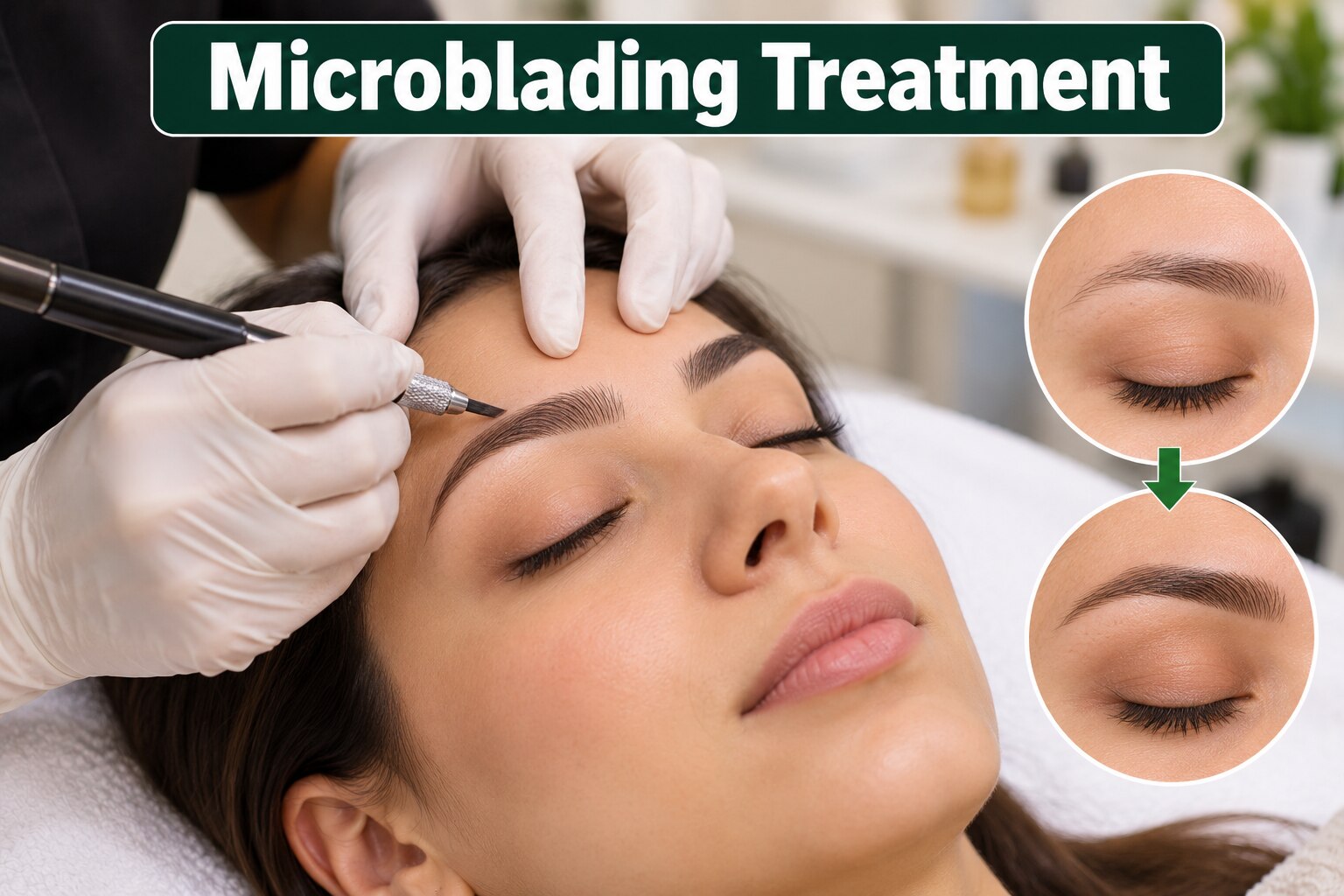
Microblading makes sparse eyebrows look fuller by placing fine pigment marks where natural hairs are missing. It is a form of cosmetic tattooing: a handheld blade creates shallow cuts in the skin and deposits pigment through superficial skin pigment deposition.
The marks imitate individual hairs, so visible gaps, a short tail, or uneven borders appear more filled in without adding actual hair growth.
A typical microblading treatment follows this sequence:
- During consultation, you discuss your brow concerns, desired shape, and color.
- The practitioner maps the brow outline to balance both sides before any pigment is placed.
- A pigment shade is selected to complement your existing brow hair and skin tone.
- Topical numbing reduces discomfort, then a manual microblading tool creates hair-like strokes in the mapped areas.
The result is most convincing when some natural eyebrow hair remains to blend with the simulated strokes. A practitioner can place pigment only in empty sections, preserving open skin between marks instead of covering the entire brow with a solid block of color.
This creates the visual impression of greater density and can make thin or asymmetrical brows look more even.
Do not use microblading to hide sudden, patchy, or progressive eyebrow loss before seeking medical advice. Thyroid disease, alopecia areata, dermatitis, nutritional problems, and medication effects need different treatment. Brows also look darker and sharper immediately afterward; healing usually softens the color, with final assessment around four to six weeks.
The design choices that keep hairstrokes believable
A practitioner creates separate-looking eyebrow hairs by controlling spacing, direction, depth, and colour rather than filling the entire outline. The design starts with conservative brow mapping that follows your facial proportions, existing hairline, arch, and natural asymmetry.
- Stroke direction follows nearby hair: upward near the inner brow, angled through the arch, and more horizontal toward the tail.
- Stroke length and curvature vary slightly, because identical marks in a repeated pattern look stamped on.
- Negative space remains between hairstrokes, especially where natural hair already provides coverage; an excessively dark border makes the brow resemble makeup.
Pigment selection should match the depth and undertone of your natural brow hair, not simply the darkest available shade. A colour that is too dark, warm, or cool can make individual strokes stand out after healing and fading.
After topical numbing, the practitioner uses a manual microblading tool to place pigment into the superficial skin with controlled pressure. Shallow, precise cuts keep each mark narrow; excessive pressure drives pigment deeper, where it can spread, blur, and merge into a painted-looking block.
Natural hair helps conceal the transition between real and implanted strokes. On completely hairless skin, even careful work can look like pigment at close range, so a conservative shape is safer than adding maximum density. Avoid repeated darkening before the first healed result is assessed.
Who is a suitable candidate—and who should wait
Microblading suits stable thin eyebrows caused by over-plucked eyebrows, naturally light growth, uneven arches, or aging-related brow gaps. It fills the visual space but does not stimulate new hair or treat the reason behind hair loss.
Choose medical assessment before cosmetic camouflage if eyebrow loss is sudden, patchy, itchy, scaly, or progressively worsening. Alopecia areata, thyroid disease, dermatitis, nutritional deficiencies, and medication effects can require treatment that pigment cannot provide.
- Postpone treatment until the brow area is clear of active eczema, psoriasis, dermatitis, infection, redness, or swelling.
- Discuss keloid scarring, significant allergies, immune suppression, or medicines that affect healing with a qualified medical professional before booking.
- Treat oily skin as a durability concern: excess oil, exfoliation, retinoids, acids, and sun exposure can blur or fade hairstrokes sooner.
- Delay the procedure if you cannot accept residual pigment. Color can remain for years, while removal may require several sessions and cause scarring, pigment changes, or unexpected color shifts.
| Concern | Microblading fit | Better decision |
|---|---|---|
| Stable sparse or over-plucked brows | Fills gaps and balances arches | Proceed after a patch test and consultation |
| Sudden or progressive loss | Conceals symptoms without treating the cause | Seek medical assessment first |
| Active eczema or infection | Raises irritation and healing risks | Wait until the skin settles |
| History of keloid scarring | Raises the risk of abnormal scarring | Obtain medical advice before considering it |
Microblading compared with other brow techniques
Choose microblading when you want individual-looking strokes that blend with remaining brow hair. A handheld blade places pigment superficially, so it creates visual density without growing new hair. The result depends on conservative mapping and stroke placement, not simply adding more color.
| Technique | Finish and method | Difference from microblading |
|---|---|---|
| Microblading | Manual, hair-like strokes | Best suited to blending gaps with existing hairs; strokes can look less convincing on completely bare skin. |
| Powder brows | Soft, pixelated shading across the brow | Produces a filled-in makeup effect rather than separate hairs. |
| Ombré brows | Lighter front fading into a deeper tail | Uses graduated shading, while microblading focuses on simulated hairs. |
| Nano brows | Fine machine-made hairstrokes | Similar in appearance, but uses a motorised needle rather than a manual blade; the practitioner’s technique and skin response still determine the finish. |
| Combination brows | Hairstrokes at the front with powder shading through the body and tail | Combines two effects for more definition than hair strokes alone. |
| Temporary makeup | Eyebrow pencil or eyebrow powder applied daily | Washes off and allows shape changes, but requires repeated application. |
| Tinting | Colors brow hair and sometimes lightly stains the skin | Adds tone, not implanted hairstrokes, and cannot replace missing structure. |
| Threading | Removes unwanted hair to refine the outline | Shapes existing brows but does not add density. |
| Eyebrow tattooing | Deeper, longer-lasting pigment, often with a solid or less natural finish | Microblading is more superficial and hair-focused, though residual pigment can still persist for years. |
Microblading is not automatically the most natural option. Pick shading for a makeup look, temporary products for flexibility, or medical assessment before any technique if eyebrow loss is sudden or progressing.
What to check before booking and during healing
Compare providers by checking hygiene, healed results, and the treatment plan before you pay a deposit. Ask whether the practitioner opens single-use sterile blades in front of you, changes gloves, disinfects the work surface, and uses sealed pigment. These infection control steps reduce contamination from instruments, hands, water, and pigment.
| Check | Good evidence | Warning sign |
|---|---|---|
| Hygiene | Single-use sterile blades, fresh gloves, documented infection control | Reusable blades, vague answers, or an opened pigment cup |
| Results | Clear photographs taken after microblading healing | Only freshly completed, dark brows |
| Plan | Written aftercare, conservative design, and a scheduled follow-up session | Pressure to create a very dark shape immediately |
Understand microblading risks before booking. Active eczema, psoriasis, dermatitis, infection, or inflammation at the brow site needs treatment first. Discuss keloids, serious allergies, immune suppression, or medicines affecting healing with a qualified medical professional. Sudden or spreading eyebrow loss also deserves medical assessment.
Your brows will look darker, sharper, and more saturated at first; do not judge pigment retention on day one. Keep them dry according to the provider’s instructions, avoid picking flakes, and wait four to six weeks for a reliable color and shape assessment.
A follow-up session then adds small amounts of pigment instead of overloading healing skin.
Maintenance is not optional: pigment fades, but residual color can last for years, and removal can require several sessions. Ask DIVINE AESTHETICS how it assesses healed work before agreeing to any touch-up.
Frequently asked questions
How does microblading fill gaps in sparse eyebrows?
A technician deposits pigment into shallow skin cuts to imitate individual hairs in areas with missing or thin growth. The strokes are placed between existing hairs so the brow appears denser.
What keeps microbladed hairstrokes looking believable?
A natural result depends on matching stroke direction, length, thickness, spacing, arch shape, and pigment tone to your existing brow hair and facial features.
Who is a suitable candidate for microblading, and who should wait?
Microblading suits people with sparse or uneven brows who want a fuller visual shape. Wait if the brow area is irritated, infected, sunburned, or healing, and seek medical guidance for conditions or medicines that affect skin healing or bleeding.
How does microblading compare with other brow techniques?
Microblading creates hair-like strokes, while powder brows create a shaded makeup effect and brow tint temporarily darkens existing hairs without filling bare skin. Compare the desired finish, maintenance, skin condition, and healing process.
What should you check before booking and during healing?
Ask about the technician’s training, sterile single-use blade, pigment brand and batch details, consent process, patch testing policy, aftercare instructions, and what to do if redness, swelling, pain, or discharge worsens during healing.