

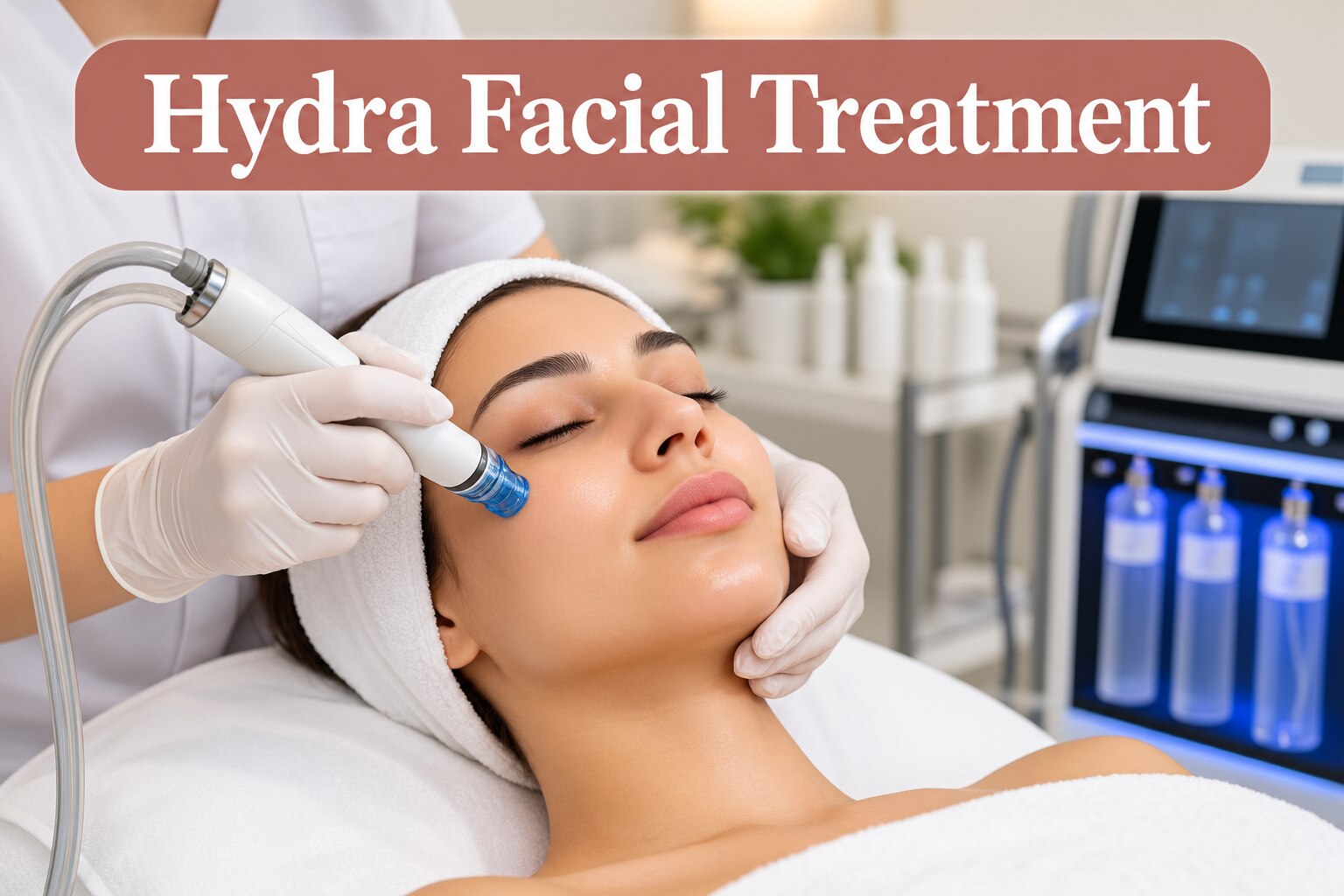
A HydraFacial session moves from surface cleansing and exfoliation to a mild acid peel, controlled pore extraction and serum application. Knowing what each stage feels like, what hydration can realistically improve and when treatment should be postponed will help you judge whether it suits your skin and choose safer aftercare.
Key takeaways
- Expect cleansing, exfoliation, extraction and serum infusion in sequence.
- Ask for adjustments to the tip, peel and serum for your skin type.
- Expect temporary redness or tightness, not permanent correction from one session.
- Confirm contraindications, hygiene practices and aftercare before booking.
What happens at each stage of a HydraFacial session?
Most HydraFacial treatment steps follow the same sequence, although the tip, peel and serum can be adjusted for dry, sensitive, pigmented or acne-prone skin. The handpiece uses controlled liquid flow and suction, so the treatment feels active without needles.
1. Cleansing and exfoliation remove makeup, oil and loose surface cells. The tip glides across your skin with a wet, light scraping sensation. You may feel mild tingling, but this stage should not feel painful or abrasive.
2. The acid peel applies a mild solution containing glycolic acid, salicylic acid or both. It loosens superficial buildup: glycolic acid works mainly on the bonds between surface cells, while oil-soluble salicylic acid suits congestion. Expect coolness or brief tingling; tell the practitioner if you feel burning.
3. Vacuum-assisted extraction uses suction to lift oil and debris from pores. You may notice pressure, small tugging sensations or brief sensitivity around the nose and chin. Strong suction is not a sign of a better result and can leave irritation or tiny extraction marks.
4. Serum infusion floods the freshly treated surface with a hydrating formula. Water-based ingredients such as hyaluronic acid attract moisture, producing a cool, slippery feeling and temporary plumpness. A moisturizer or sunscreen may follow to reduce water loss.
Active inflammatory acne, rosacea, eczema, sunburn, open wounds or infection can make acid exposure and suction more irritating, so the sequence may need modification or postponement.
How hydradermabrasion supports surface hydration
Hydradermabrasion combines a liquid solution with a controlled vacuum handpiece. The flow loosens surface debris and helps carry it away while suction lifts excess oil and softened buildup. Unlike dry abrasion, the liquid cushions contact, so the outer layer usually experiences less mechanical disruption than with aggressive scrubbing or deeper resurfacing.
| Option | What it means | Hydration implication |
|---|---|---|
| Microdermabrasion vs HydraFacial | Microdermabrasion uses abrasive crystals or a diamond tip; hydradermabrasion uses liquid flow, suction and solution delivery. | The liquid-based approach can leave less tightness while adding water-based ingredients. |
| Conventional facial | Manual cleansing, massage, masks or extractions, with results depending on the products and technique. | It can soften and moisturize the surface but does not necessarily provide controlled fluid flow or serum delivery. |
| Chemical peel | An acid solution loosens bonds between surface cells; glycolic acid targets superficial buildup, while salicylic acid suits oilier, congested skin. | Peeling can smooth texture but can also increase dryness or irritation if the strength or contact time is excessive. |
The immediate moisture comes partly from the infused serum. Humectants such as hyaluronic acid bind water near the surface, creating temporary plumpness and a smoother reflection of light; they do not replace dermal volume or permanently raise baseline hydration.
Skin barrier hydration lasts longer when the outer barrier remains intact. Apply a bland moisturizer after treatment, avoid irritating actives until the skin feels comfortable, and use broad-spectrum sunscreen; an occlusive moisturizer helps slow water loss better than a single serum application alone.
What the consultation should check before treatment
A HydraFacial consultation should determine whether your skin barrier can tolerate exfoliation, acid exposure, suction and serum infusion on that day. The practitioner should ask:
1. Which products do you use now? Name prescription retinoids, exfoliating acids such as glycolic or salicylic acid, benzoyl peroxide, acne medicines, scrubs and fragranced products.
2. Do you have active acne and rosacea, eczema, psoriasis, unusual sensitivity, frequent cold sores or a history of post-inflammatory hyperpigmentation? Active cold sores require postponement, while inflammatory conditions may require a gentler protocol or medical clearance.
3. Have you reacted to a peel, serum, fragrance, preservative or botanical ingredient? Confirm allergies before any product touches your skin, especially around the eyes.
4. Have you had waxing, shaving irritation, a recent chemical peel or laser, microneedling, injections or another resurfacing procedure? Recent treatment can leave the barrier vulnerable to suction and acids.
Postpone treatment over open wounds, skin infection, sunburn, severe irritation or a fresh procedure site. Uncontrolled inflammatory disease also requires medical review rather than routine exfoliation. These findings are key HydraFacial contraindications for that appointment, although the practitioner may modify the peel, suction strength or serum when the concern is mild.
Ask exactly which products will be omitted and when to stop irritating actives before rescheduling.
What results, aftercare and side effects are realistic?
HydraFacial results are usually most noticeable immediately: smoother texture, more surface moisture and a temporarily plumper, brighter appearance. That effect comes from removing superficial scale and adding water-based serum, not from rebuilding deeper skin.
One session does not permanently treat pigmentation, active acne, acne scars, wrinkles or enlarged pores, and it does not replace laser resurfacing, microneedling or fillers.
| Result | What it means | How long it lasts |
|---|---|---|
| Smoothness | Less surface roughness after exfoliation | Often days, depending on your routine |
| Hydration | Humectants such as hyaluronic acid bind water at the surface | Temporary; moisturizer helps reduce water loss |
| Plumpness | Outer skin holds more water and reflects light better | Usually short-lived |
| Pores and lines | They may look less obvious when skin is hydrated | Not permanent structural correction |
HydraFacial aftercare should protect the barrier:
- Apply a bland moisturizer and broad-spectrum sunscreen. Freshly exfoliated skin reacts more easily to sunlight.
- Avoid retinoids, exfoliating acids, scrubs, benzoyl peroxide and fragranced products until your skin feels comfortable.
- Expect redness after HydraFacial, tightness, stinging, dryness or sensitivity for several hours and sometimes up to 48 hours. Small extraction marks or pinpoint bruises can last a few days.
- Contact a medical professional for worsening pain, marked swelling, blistering, pus, spreading redness, fever or symptoms that persist beyond the expected recovery period. These are not routine HydraFacial side effects.
How to choose a safe, customized HydraFacial appointment
A safe customized HydraFacial starts with specific questions, not the brand name alone. HydraFacial is a branded device treatment using disposable tips, controlled liquid flow and suction; it is not one identical protocol at every clinic.
| Treatment element | What may differ | What to confirm |
|---|---|---|
| Disposable tip | Tip design and replacement between clients | Ask whether a sealed, single-use tip is opened for you |
| Peel | Glycolic acid, salicylic acid, both, or neither; concentration and exposure time | Request the HydraFacial peel ingredients |
| Suction | Strength and time spent over each area | Ask how the HydraFacial suction settings will be adjusted for fragile or sensitive skin |
| Serum or booster | Hydrating serum, acne-focused formula, pigment-focused product, or another booster | Ask for the product name and ingredient list |
Use the consultation to check:
- Fragrance, preservatives and botanical ingredients if you react easily.
- Glycolic acid if your skin is sensitive to exfoliating acids; salicylic acid if oil congestion or acne is the concern.
- The aftercare plan, including moisturizer, sunscreen and the date you can restart retinoids or exfoliating acids.
- Whether broken skin, active infection, sunburn, severe irritation, eczema flare, rosacea flare or a recent peel, laser treatment or waxing means postponement.
At Divine Aesthetics Bengaluru, ask the practitioner to document your chosen tip, peel, suction level, serum and aftercare rather than accepting a preset package. Postpone treatment if your skin is inflamed or healing; “non-invasive” does not make every formulation suitable for everyone.
Related service
Hydrafacial Hydrafacial At Divine Aesthetics, our Hydrafacial service offers a revolutionary, non-invasive skincare treatment designed to rejuvenate and revitalize your... |
Frequently asked questions
What happens during each stage of a HydraFacial session?
The session usually moves through cleansing, exfoliation, a peel, suction-assisted extraction and infusion of a selected serum. The practitioner can adjust the tip, peel and serum for your skin’s needs.
How does hydradermabrasion support surface hydration?
Hydradermabrasion combines controlled liquid flow with suction to loosen surface debris and support serum application without needles. It improves the skin’s surface feel, but it does not replace daily moisturiser or water intake.
What should a consultation check before HydraFacial treatment?
The consultation should review your skin condition, sensitivity, acne, pigmentation, current products, recent procedures, allergies and any reason to avoid exfoliation or suction.
What results, aftercare and side effects are realistic?
You may notice smoother, fresher-feeling skin after treatment. Follow the clinic’s aftercare instructions, protect your skin from sunlight and avoid irritating products until advised. Temporary redness, tightness or sensitivity can occur.
How do you choose a safe, customized HydraFacial appointment?
Choose a provider that explains the device, uses clean or single-use treatment components where applicable, records your medical and skincare history, and tailors the tip, peel and serum rather than using one setting for everyone.