

Dark circles can come from brown pigment, visible vessels, thin skin, allergies, rubbing, swelling, or a hollow that casts a shadow. By the end, you will know when an under-eye peel matches the problem, what technical details and safety questions to ask, and how aftercare affects the result.
Key takeaways
- A peel suits brown epidermal pigment, not hollows, visible vessels, or under-eye swelling.
- Expect a planned series, not instant removal of long-standing pigmentation.
- Ask about post-inflammatory pigmentation risk, peel ingredients, and eye-area safety protocols.
- Use prescribed aftercare and daily broad-spectrum sunscreen after treatment.
First identify what is making the under-eye area look dark
A peel is relevant only when darkness comes from pigment in the outer skin, not from a hollow, visible vessels, or swelling. Brown under-eye pigmentation usually looks tan to brown and remains similar when you change lighting; a superficial peel can target that uneven epidermal tone.
Dark circles have several types, and more than one can appear together:
- Brown under-eye pigmentation: excess melanin or post-inflammatory pigment creates a brown, tan, or grey-brown cast.
- Blue or purple vascular colour: thin, translucent eyelid skin reveals vessels beneath it; peeling the surface will not remove that colour.
- Tear-trough shadowing: a hollow beside the nose and lower eyelid catches a shadow, which a peel cannot fill.
- Swelling, allergies, or rubbing: puffiness and repeated irritation can deepen darkness or trigger post-inflammatory pigmentation.
Check the area in direct and indirect light, then gently stretch the skin without pulling hard. If the darkness changes sharply with lighting or stretching, shadowing is contributing; persistent hollowing points to structure rather than surface pigment.
A credible assessment also checks for puffiness, lax skin, rubbing, and vascular colour instead of labelling every concern “pigmentation.” If your skin easily develops dark marks, the peel itself can cause post-inflammatory hyperpigmentation and temporarily make the area darker.
How an under-eye peel changes uneven surface pigment
A superficial peel can brighten uneven brown pigment by loosening and lifting pigmented cells in the outer epidermis. The under-eye peel mechanism affects surface tone, not the hollow beneath it: it cannot fill a tear trough, reposition a fat pad, tighten lax skin, or erase blue-purple vascular colour.
If rubbing or allergy continues, new pigment can replace what the peel removed.
“Under-eye peel” is not a standardized treatment name. Ask which formulation is being used and how its strength is controlled.
| Formulation detail | What it changes | Why it matters under the eyes |
|---|---|---|
| Peeling agent | Determines how the outer cells loosen and shed | Lactic acid, glycolic acid, salicylic acid, and blended formulas behave differently near the eye |
| Acid concentration | Sets the amount of active acid available | A stronger concentration increases penetration and irritation risk in thin, sensitive skin |
| pH and contact time | Control how quickly the acid acts | Lower pH or longer contact can intensify the peel; the plan must specify timed removal or neutralisation |
| Depth | Separates superficial treatment from medium-depth treatment | Superficial treatment targets epidermal pigment; deeper treatment brings greater inflammation and pigmentation risk |
A peel can therefore make the area temporarily darker through post-inflammatory hyperpigmentation, particularly if you have a deeper skin tone or a history of dark marks after irritation. Confirm the expected depth, number of passes, and sun-protection instructions before treatment; ultraviolet exposure can prolong inflammation and undermine the result.
What happens during treatment and across a planned series
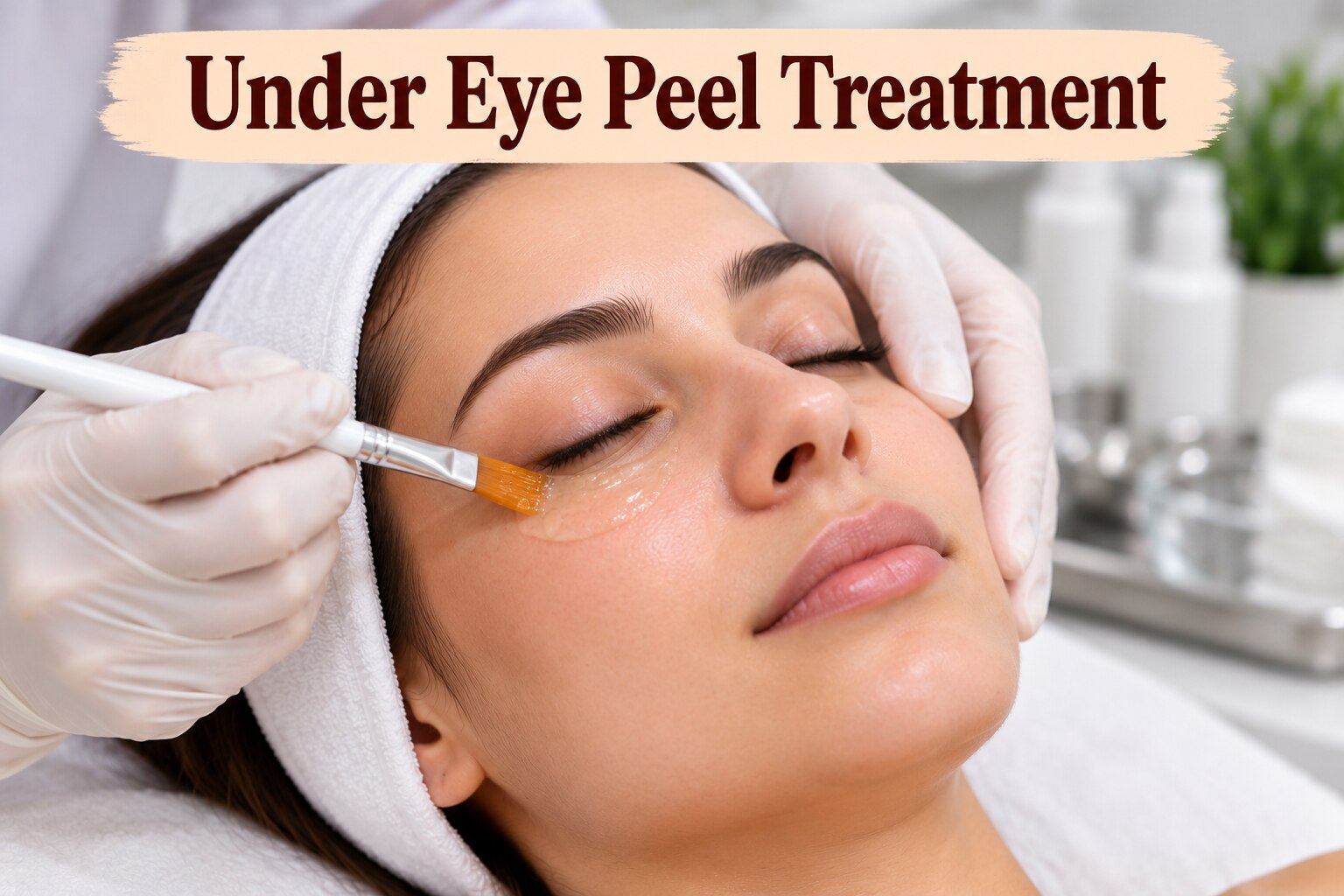
An under-eye peel appointment starts with a review of the product, strength, pH, contact time, and your history of irritation or pigmentation. The clinician should confirm that the target is surface pigment rather than hollowing or vascular colour before applying anything near the eyes.
- Cleanse and dry the skin, keeping makeup and oils away from the treatment area.
- Place eye protection before applying the peel a controlled distance from the lash line.
- Monitor the timed contact period; do not assume stronger stinging means better results.
- Remove or stop the peel through neutralisation, rinsing, or the product’s specified removal method, then apply a soothing product and explain home care.
Expect brief stinging, warmth, redness, tightness, or sensitivity during and shortly after treatment. Scaling or light crusting can develop later; excessive burning, swelling, or worsening pain needs prompt contact with the provider.
Brightening rarely appears immediately. Superficial peels loosen outer pigment, so tone often looks clearer after the skin settles, while visible improvement develops across several sessions separated by peel recovery time. The interval depends on the formulation and your reaction, not a fixed calendar schedule.
A temporary darkening phase can occur when inflammation triggers post-inflammatory hyperpigmentation, especially in skin that marks easily. Protect the area from ultraviolet exposure without getting sunscreen in the eye, and avoid rubbing; either can prolong discoloration or undo gradual gains.
Safety checks, post-inflammatory pigmentation, and aftercare
A peel should be postponed if the under-eye skin is already inflamed, injured, infected, or unusually sensitive. Peeling through a damaged barrier can intensify burning, prolong redness, and trigger post-inflammatory hyperpigmentation, especially in darker skin tones or in anyone who develops marks after acne, waxing, or minor injuries.
| Condition | Why it raises risk | Safer decision |
|---|---|---|
| Active eczema, dermatitis, infection, or open skin | Inflammation and chemicals can worsen each other | Wait until the skin has healed |
| Recent intense sun exposure or sunburn | UV increases inflammation and pigment production | Reschedule and restore the barrier |
| Recurrent cold sores | Irritation can reactivate the virus | Tell the clinician before treatment |
| Retinoids, exfoliating acids, benzoyl peroxide, or irritating products | Combined irritation can cause excessive peeling | Disclose every product and follow a pause plan |
| History of post-inflammatory hyperpigmentation | Healing can leave darker marks than the original concern | Discuss a patch test or gentler alternative |
Aftercare protects both comfort and the result:
- Apply only the bland cleanser, moisturiser, and soothing product recommended for you; do not scrub, pick flakes, or restart active ingredients until cleared.
- Use broad-spectrum SPF 30 or higher every morning, placing it carefully around—not inside—the eyes. Add sunglasses and a hat because UV exposure can deepen post-inflammatory hyperpigmentation.
- Avoid tanning, hot steam, vigorous exercise, and fragranced eye products while the area is peeling or tender.
Contact the provider for worsening swelling, blistering, severe pain, pus, or vision changes rather than applying another product to the area.
Questions to ask before choosing an under-eye peel
Ask for the diagnosis before agreeing to an acid. A credible under-eye peel consultation should compare photographs taken in consistent lighting, identify pigment versus shadowing, blue-purple vascular colour, swelling, rubbing, or laxity, and explain what the peel cannot change.
Ask these questions:
- What ingredient, concentration, pH, contact time, number of passes, and peel depth will you use?
- How far from the lash line will you apply it, and how will you protect the eye?
- What result is realistic, and what is the plan if darkness is structural or vascular?
- What is my risk of post-inflammatory hyperpigmentation, pigmentation recurrence, or delayed irritation?
- Will you perform a patch test or use a cautious first session? A patch test reduces uncertainty but cannot prove eyelid skin will tolerate full treatment.
| Main appearance | What a peel can do | Alternative to discuss |
|---|---|---|
| Brown, surface pigment | Brighten uneven epidermal tone | Superficial peel or pigment-focused care |
| Blue or purple colour | Usually does not remove vascular colour | Vascular assessment |
| Hollow or fixed shadow | Cannot fill the tear trough | Structural assessment |
| Puffiness or lax skin | Cannot reposition fat or tighten skin | Structural assessment |
| Allergy or rubbing | May worsen irritation | Trigger control and medical review |
Whether your consultation is at DIVINE AESTHETICS or elsewhere, ask for written aftercare, including broad-spectrum sun protection that stays out of the eyes. Compare under-eye treatment alternatives before choosing; darker skin or prior pigment reactions deserve extra caution.
Related services
Black Peel Divine Aesthetics: Black Peel Service At Divine Aesthetics, we are proud to offer our specialized Black Peel treatment, designed to rejuvenate and... View service → |
Yellow Peel Service Description from Divine Aesthetics At Divine Aesthetics, we proudly offer the transformative Yellow Peel, a cutting-edge chemical peel... View service → |
Frequently asked questions
How can you tell whether dark circles come from pigment?
Pigment-related darkness usually looks tan to brown and stays similar when lighting changes. Hollows, visible vessels, and swelling need different approaches.
How does an under-eye peel improve uneven skin tone?
A superficial peel loosens part of the pigmented outer epidermis, helping uneven brown tone shed gradually as the skin renews.
How many under-eye peel treatments are needed?
The number depends on pigment depth, skin response, and the chosen peel. A clinician plans the interval and series after assessing your skin.
How can you reduce post-inflammatory pigmentation after an under-eye peel?
Follow the prescribed aftercare, avoid picking or rubbing peeling skin, limit heat and sun exposure, and use the recommended broad-spectrum sunscreen.
What should you ask before choosing an under-eye peel?
Ask what causes your darkness, which peel and concentration will be used, how the eyes will be protected, expected downtime, risks, aftercare, and alternatives.
Related services
Chemical Peel At Divine Aesthetics, our Chemical Peel service offers a rejuvenating and transformative skincare experience designed to enhance your natural beauty. View service → |
Pigmentation treatment At Divine Aesthetics, we offer advanced pigmentation treatments tailored to address various skin concerns, from sunspots and age spots to melasma and... View service → |
Acne marks treatment At Divine Aesthetics, we specialize in providing advanced and comprehensive treatments to effectively reduce and eliminate acne marks, helping you... View service → |
Hydrafacial Hydrafacial At Divine Aesthetics, our Hydrafacial service offers a revolutionary, non-invasive skincare treatment designed to rejuvenate and revitalize your... |