

A brown patch is not automatically a sunspot, and treating the wrong condition can worsen pigmentation or delay diagnosis of a suspicious lesion. By the end, you will know how clinicians distinguish common causes, which topical and procedural options fit each one, what risks to question, and why maintenance matters.
Key takeaways
- Get a diagnosis before treating any new, changing or unusual dark patch.
- Use broad-spectrum SPF 30 or higher every day to limit recurrence.
- Choose peels, lasers, IPL or microneedling according to the diagnosis and skin tone.
- Expect gradual improvement and plan maintenance because pigmentation can return.
Start With the Diagnosis: Melasma, Sunspots or Post-Inflammatory Pigmentation?
The safest treatment choice starts with identifying whether the patch is melasma, a sunspot, or post-inflammatory hyperpigmentation. Appearance alone cannot confirm the diagnosis, especially because solar lentigines can resemble skin cancer.
| Pattern | More consistent with | Clue before treatment |
|---|---|---|
| Melasma | Brown or grey-brown melasma | Symmetrical, flat patches on both cheeks, the forehead, nose or upper lip; often worsened by sunlight or hormonal changes |
| Sunspots | Solar lentigines, also called sunspots | Separate, flat, sharply outlined tan-to-brown marks on sun-exposed skin, including the face, hands and chest |
| After irritation | Post-inflammatory hyperpigmentation | A mark appears where acne, eczema, a burn, waxing, a rash or an aggressive procedure caused inflammation |
| Raised lesion | Seborrheic keratosis or another growth | A waxy, rough or “stuck-on” surface rather than a flat patch |
A new, changing, asymmetric, bleeding, crusting or distinctly different lesion needs medical assessment before cosmetic treatment. Do not laser or peel it first: destructive treatment can remove tissue needed for diagnosis and delay melanoma detection.
Melasma usually forms a broader, symmetrical pattern and can return after treatment. Post-inflammatory hyperpigmentation requires control of the original inflammation and avoidance of further irritation; adding strong products too quickly can darken it.
A clinician should examine uncertain patches, particularly before choosing a peel, intense pulsed light or pigment-targeting laser, because thermal injury can cause persistent pigmentation, especially in darker skin.
Build the Foundation With Sunscreen and Topical Treatment
Use SPF 30 or higher every morning, even on days spent mostly indoors near windows. Choose a broad-spectrum sunscreen with strong UVA protection; for melasma, a tinted formula containing iron oxides adds defence against some visible light that ordinary UV-only sunscreen does not fully block.
Reapply every two hours during outdoor exposure and after sweating or swimming.
| Option | What it does | When it applies |
|---|---|---|
| Tinted sunscreen with iron oxides | Limits UV and some visible-light stimulation | Essential for melasma and useful for all dark patches |
| Azelaic acid 15–20% | Reduces pigment production and inflammation | Melasma, post-inflammatory hyperpigmentation and acne-prone skin |
| Hydroquinone 2–4% | Potent pigment suppressor | Short, clinician-directed courses for melasma or stubborn patches |
| Tretinoin or another retinoid | Speeds cell turnover and improves penetration of other treatments | Melasma or post-inflammatory marks when irritation is controlled |
| Triple-combination cream | Combines hydroquinone, tretinoin and a corticosteroid | Selected melasma cases under prescription monitoring |
Hydroquinone needs treatment breaks: prolonged or inappropriate use can cause exogenous ochronosis, a persistent blue-gray or brown-black discoloration. Retinoids and acids can also irritate skin, and irritation can deepen post-inflammatory pigmentation after acne, eczema, waxing or burns.
Treat the trigger as well as the colour. Control acne or eczema, stop abrasive scrubs and pause any product that causes burning or peeling. Ask a clinician before treating a new, changing, asymmetric, bleeding or crusting spot; a solar lentigo can resemble melanoma, and cosmetic destruction can remove tissue needed for diagnosis.
Compare Peels, Lasers, IPL and Microneedling
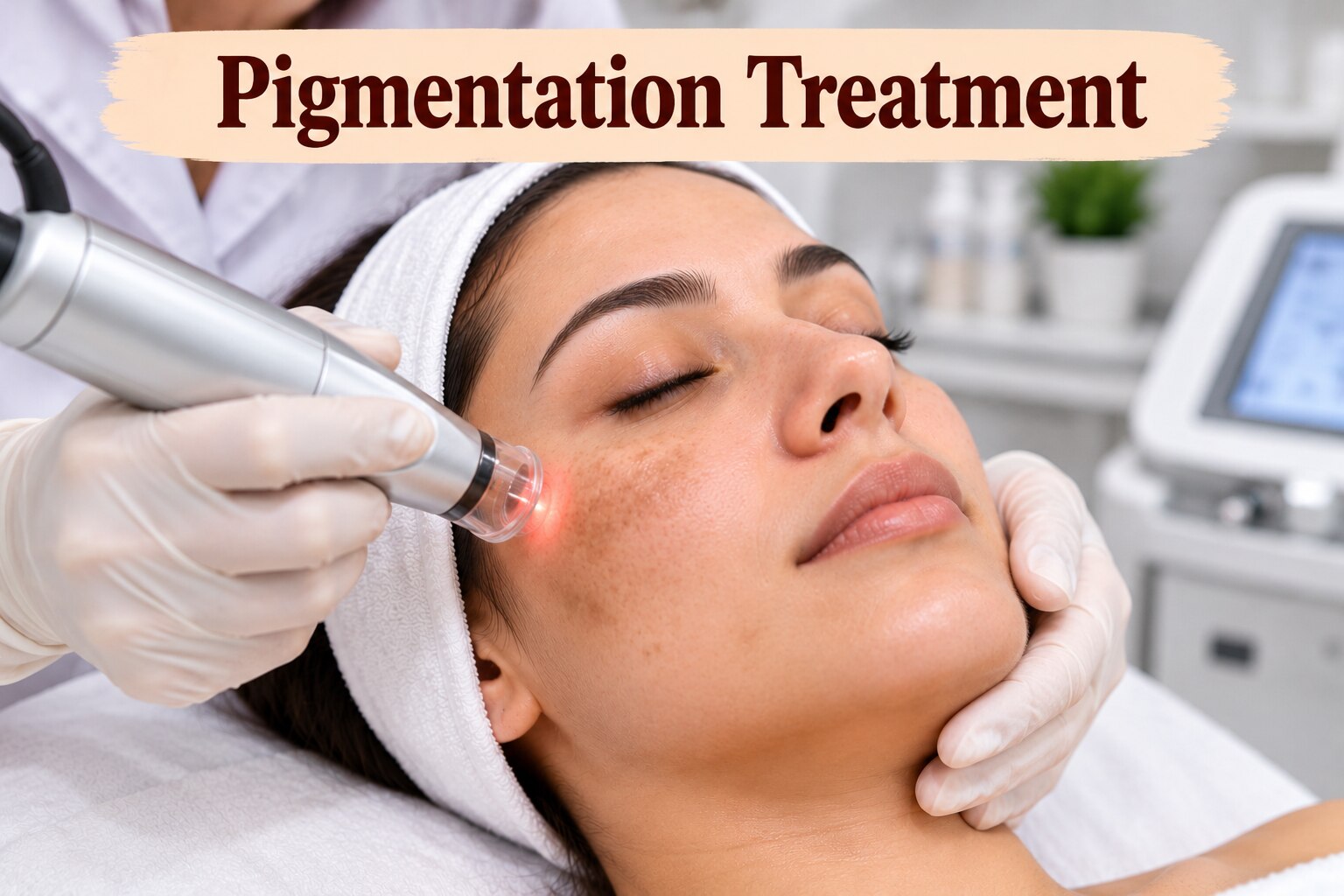
Melasma suits conservative treatment: superficial peels or microneedling may support topical therapy, while lasers and IPL carry a higher risk of worsening it. Solar lentigines respond more directly to pigment-targeting lasers or IPL after a clinician confirms that each spot is benign.
Post-inflammatory hyperpigmentation needs control of the acne, eczema, burn or other trigger first; a gentle peel can help after inflammation settles.
| Diagnosis | Usually considered | Main risk or limitation |
|---|---|---|
| Melasma | Superficial glycolic acid, lactic acid or salicylic acid peels; cautious microneedling | Heat and excessive inflammation can cause rebound pigmentation |
| Solar lentigines | IPL or a pigment-targeting laser; selected chemical peels | A suspicious, raised or changing lesion needs examination, not cosmetic treatment |
| Post-inflammatory hyperpigmentation | Topical treatment, then a gentle peel or carefully selected microneedling | Treating active inflammation or using excessive energy can deepen the patch |
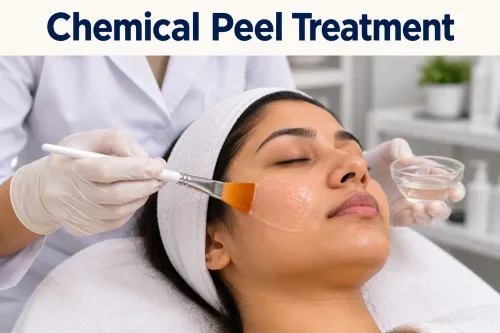
“Black Peel” and “Yellow Peel” are not universal chemical formulas, so the colour alone does not identify depth, ingredients or contact time. Black Peel can describe a carbon-based laser treatment or a dark-coloured chemical peel; Yellow Peel commonly refers to a retinoic-acid blend, sometimes combined with agents such as kojic acid.
Ask for the ingredient list, concentration, pH and time on the skin. Trichloroacetic acid (TCA) generally acts more strongly than superficial acid peels and carries greater irritation risk. Stop if burning or dermatitis develops.
What a Safe Pigmentation Consultation Should Cover
Before treating a dark lesion, the clinician should confirm what it is and identify factors that raise irritation risk. A new, changing, asymmetric, bleeding, crusting, or “different-looking” spot needs medical assessment, often with dermoscopy and sometimes a biopsy, before laser or a peel. Destructive treatment can remove diagnostic tissue and delay melanoma diagnosis.
1. Review the medical history, including pregnancy, eczema, acne, burns, waxing, previous procedures, keloid or post-inflammatory hyperpigmentation, and medicines that increase sun sensitivity or affect healing. A medication review should include retinoids, hydroquinone, antibiotics, isotretinoin, and blood thinners.
2. Examine the distribution, borders, colour, texture, and symmetry of each patch. Check for active acne, dermatitis, infection, or broken skin; treating inflammation first prevents a new dark mark from replacing the old one.
3. Match the procedure to your skin tone and risk profile. Ask whether a test spot will be performed before treating a larger area, especially with a peel, laser, IPL, microneedling, or radiofrequency microneedling. Compare the test area after healing, not immediately after treatment.
4. Start with one active change, gentle cleansing, moisturiser, and broad-spectrum SPF 30 or higher. Reduce or stop treatment if burning, swelling, or dermatitis develops; irritation itself can deepen pigmentation.
At DIVINE AESTHETICS, ask the clinician to record the diagnosis, device settings or peel agent, aftercare, and review date so you can recognise worsening inflammation early.
Related services
Pigmentation treatment At Divine Aesthetics, we offer advanced pigmentation treatments tailored to address various skin concerns, from sunspots and age spots to melasma and... View service → |
Black Peel Divine Aesthetics: Black Peel Service At Divine Aesthetics, we are proud to offer our specialized Black Peel treatment, designed to rejuvenate and... View service → |
Set Realistic Timelines and Plan for Maintenance
Visible improvement can take 8 to 12 weeks with a consistent topical plan, while a procedure may show an earlier change without producing a finished result after one visit. Treatment sessions are usually spaced 3 to 6 weeks apart so the skin can recover and any irritation or post-inflammatory hyperpigmentation can settle.
- Sunspots or solar lentigines: selected laser or intense pulsed light treatments may need 1 to 3 sessions, followed by strict sun protection.
- Melasma: plan for about 3 to 6 sessions when peels, microneedling or carefully selected devices are used, with results assessed gradually rather than after one treatment.
- Post-inflammatory hyperpigmentation: improvement often takes several months because the original acne, eczema or injury must stop causing inflammation before pigment fades.
These are planning ranges, not guarantees. A strong peel or high device setting can make a patch look darker, extending the timeline instead of shortening it. Burning, persistent redness or scaling calls for a review and often a pause or reduction in irritating products.
Melasma recurrence happens because treatment reduces visible pigment but does not remove the triggers that activate melanocytes. Ultraviolet and visible light exposure, heat, hormonal changes and skin irritation can restart the process; pigment can also return after stopping selected treatments such as oral tranexamic acid.
Post-treatment care is part of the treatment: use broad-spectrum sunscreen every day, limit heat and sun exposure, moisturise, and follow the prescribed maintenance treatment. Many people need a lower-intensity topical routine or periodic review after clearing, rather than repeated aggressive procedures.
Frequently asked questions
How can you tell melasma, sunspots and post-inflammatory pigmentation apart?
A clinician assesses the patch’s pattern, location, colour, history and triggers. Appearance alone cannot confirm the diagnosis, and a changing or unusual patch needs medical assessment to exclude skin cancer.
What should you use before considering a pigmentation procedure?
Build a foundation with daily broad-spectrum SPF 30 or higher, sun-protective habits and a clinician-selected topical treatment. Consistent protection helps prevent darkening and improves the safety of later procedures.
How do peels, lasers, IPL and microneedling compare for pigmentation?
Chemical peels remove controlled layers of skin, lasers target pigment with focused energy, IPL uses broad-spectrum light, and microneedling creates controlled micro-injuries. The right option depends on the diagnosis, skin tone, pigment depth and risk of post-inflammatory pigmentation.
How long does pigmentation treatment take to work?
Pigmentation usually improves over multiple weeks or treatment sessions rather than overnight. Continue sun protection and follow the maintenance plan because melasma and other dark patches can recur.
Related service
Yellow Peel Service Description from Divine Aesthetics At Divine Aesthetics, we proudly offer the transformative Yellow Peel, a cutting-edge chemical peel... View service → |