
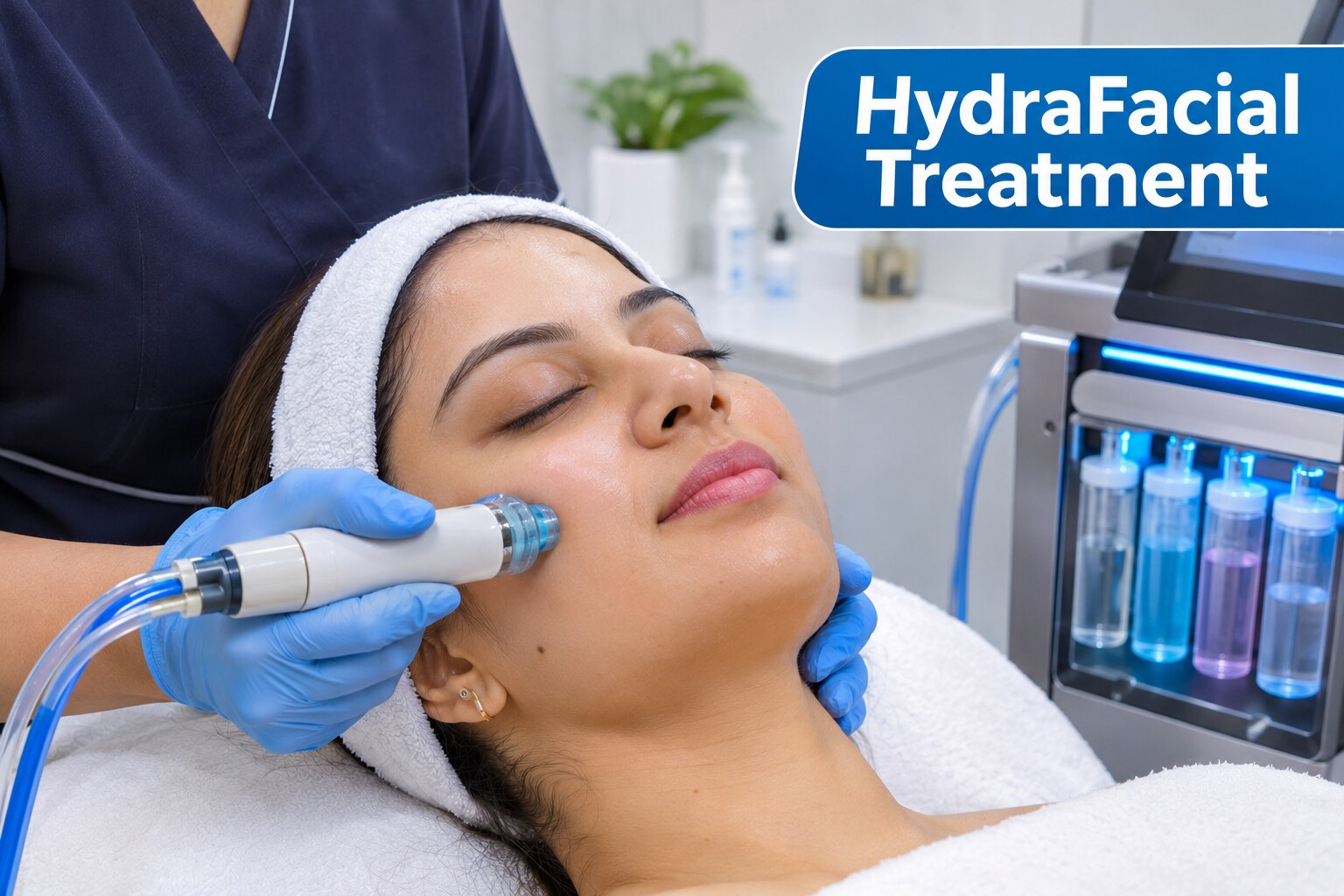
Dry, dull or congested skin can improve after surface debris is loosened, removed and followed by topical hydration, but the result depends on what the treatment can reach. By the end, you will be able to distinguish temporary moisture and cleansing effects from changes that require medical treatment or long-term barrier care.
Key takeaways
- Expect cleansing, exfoliation, extraction and serum infusion in sequence.
- HydraFacial targets surface debris, excess oil and dehydration—not every skin concern.
- Reduce or postpone extraction when skin is inflamed, irritated or barrier-damaged.
- Use gentle skincare and daily sunscreen to preserve the hydration effect.
What happens during a HydraFacial session, step by step?
A HydraFacial session uses four separate actions, not one all-purpose cleaning mechanism. The practical sequence is:
1. Cleansing removes makeup, sunscreen, excess sebum and loose surface residue. This gives the tip direct contact with the skin instead of dragging products and dirt across it.
2. Exfoliation uses a controlled physical tip, an exfoliating solution, or both. It loosens compacted corneocytes and removes dead cells from the outer stratum corneum. This is surface resurfacing, not deep skin remodeling.
3. Vacuum-assisted extraction lifts loosened sebum, keratin and material near open comedones. Suction addresses debris at the surface and follicular opening; it does not reach every blockage deeper in a follicle.
4. Serum infusion applies a selected formula to the freshly treated surface. Humectants, emollients and other ingredients in that formula provide much of the immediate moisturizing effect and softer feel.
Extraction is not sterilization or detoxification. It does not remove toxins from your body or eliminate acne-causing bacteria throughout a follicle, and it cannot reliably clear nodules or cysts.
The practitioner should adjust the solution, tip, suction pressure and number of passes to your skin condition. Treating every face identically can turn useful exfoliation into redness, burning, dryness or barrier irritation.
Which impurities and hydration problems can the treatment actually address?
Hydration here means more water in the outer stratum corneum, not permanent repair below the surface. A HydraFacial can temporarily increase that water content and leave humectants such as glycerin or hyaluronic acid, along with emollient or occlusive ingredients, on the skin.
That combination can create a softer feel and visible glow without proving barrier repair, new collagen or deeper structural change.
Its useful targets are surface impurities: excess sebum, loose dead skin, superficial congestion, material near open comedones and residue from pollution, sunscreen or makeup. The treatment loosens and lifts this material; it does not remove every cause of acne or dryness.
| Target | What it may improve | Firm boundary |
|---|---|---|
| Excess sebum | Oil and shine at the surface | Does not stop future sebum production |
| Loose dead skin | Rough texture and dull appearance | Does not remodel deeper skin |
| Open-comedone material | Some accessible plugs near follicular openings | Cannot reliably clear nodules, cysts or deep inflammatory acne |
| Surface pigmentation | Temporary brightness from removing scale | Does not remove established scars, melasma or deep pigmentation |
| Visible pores | Less contrast from oil and buildup | Cannot permanently shrink pores; anatomy, sebum, age and sun damage still matter |
The result fades as you wash your face, humidity changes, infused products wear off and the underlying barrier continues losing water. A single session therefore does not permanently clear pores or correct chronic dryness. A dramatic glow signals a surface change, not guaranteed treatment of acne, scarring or lasting structural damage.
How does HydraFacial compare with other ways to clean and hydrate skin?
HydraFacial vs standard facial comes down to control, not the treatment name. A standard facial may include cleansing, massage, masks and manual products, but results depend heavily on the practitioner and may involve less controlled exfoliation or extraction.
| Option | What it does | Best fit and trade-off |
|---|---|---|
| Standard facial | Cleansing, massage, masks and topical products | Relaxation and general care; technique and results vary |
| Manual extraction | Applies direct pressure to selected comedones | Targeted removal; excessive squeezing increases irritation, bruising and post-inflammatory marks |
| Microdermabrasion | Mechanically resurfaces the outer skin layer | Surface smoothing; it does not automatically include vacuum removal or serum infusion |
| Chemical peel | Uses a defined acid exposure for selected superficial concerns | More targeted resurfacing; downtime and irritation can exceed a gentler combined session |
| Home routine | Uses cleanser, moisturizer, sunscreen and carefully introduced exfoliation | Greatest control over frequency and barrier support; it cannot reproduce professional suction or product delivery |
The best choice depends on your priority: one-time surface smoothing, selective comedone removal or consistent home care. A HydraFacial combines exfoliation, suction and serum application, but its performance depends on the acid, tip, suction level, number of passes and serum formula. Excessive passes can cause redness and dryness instead of better hydration.
Ask for those details before comparing packages.
When should extraction be reduced, modified or postponed?
Postpone extraction over an active infection, broken skin or a recently sunburned face. These are core HydraFacial contraindications because acids, abrasion and suction can worsen injury or spread irritation.
1. Use caution with active acne, painful lesions, rosacea, active eczema, very sensitive skin or a compromised barrier. Diagnosis and treatment of the underlying condition take priority over repeated cosmetic exfoliation. Persistent flushing, scaling, painful acne or unexplained irritation needs clinical assessment.
2. Expect possible short-term redness, burning, dryness, pinpoint bleeding, petechiae or bruising. High pressure, repeated passes over one area and medicines that increase bleeding or bruising raise that risk, so tell the practitioner about anticoagulants and other relevant medicines.
3. Do not assume stronger suction gives a better clean. Excess pressure can damage the barrier without removing more useful material. The practitioner may reduce suction, shorten contact time, omit an exfoliating acid or postpone the session.
4. Treat a dramatic glow as a temporary surface effect, not proof of permanent improvement. The procedure should not promise to remove visible broken capillaries, and it does not replace medical treatment for acne, rosacea, eczema or pigmentation.
A cautious plan protects hydration better than aggressive extraction. If the skin is already inflamed, painful or peeling, waiting for clinical guidance is safer than forcing a cosmetic session.
How can you protect the hydration effect and judge a treatment responsibly?
Expect a temporary surface benefit, not permanent barrier repair. HydraFacial aftercare starts immediately: wash with a gentle cleanser, apply a bland moisturizer and use broad-spectrum sunscreen; avoid retinoids, strong acids, scrubs, fragranced products, picking and unnecessary heat until your skin feels settled.
The serum ingredients determine much of the hydration effect. Ask what was applied instead of assuming every infusion works the same way.
| Ingredient type | Main role | Limitation |
|---|---|---|
| Humectant, such as glycerin or hyaluronic acid | Attracts water to the outer skin | Does not remain permanently in the skin |
| Occlusive, such as petrolatum or dimethicone | Reduces water loss through the skin barrier | Does not correct the underlying cause of dryness |
| Emollient | Smooths rough spaces between surface cells | Provides surface comfort rather than lasting structural change |
Judge the result by improved comfort, smoother texture and less surface buildup over the following days, not by a short-lived shine. If dryness, burning or redness persists, stop active products and seek clinical advice.
Before booking, ask:
- Who will perform the treatment?
- Which exfoliant, suction level and number of passes will be used?
- How will inflamed or sensitive areas be protected?
- What findings would lead to postponement?
A consultation at DIVINE AESTHETICS in Mahalakshmi Layout, Bengaluru, can match the settings and serum choice to your skin rather than a fixed package. It should also identify when acne, rosacea, eczema or pigmentation needs medical care instead.
Related service
Hydrafacial Hydrafacial At Divine Aesthetics, our Hydrafacial service offers a revolutionary, non-invasive skincare treatment designed to rejuvenate and revitalize your... |
Frequently asked questions
What happens during a HydraFacial session, step by step?
The practitioner usually cleanses the skin, exfoliates its surface, uses a vacuum-assisted tip to loosen and collect impurities, then applies hydrating or treatment-focused serums. The exact products and intensity should be adjusted to your skin condition.
Which impurities and hydration problems can HydraFacial address?
It can help remove surface oil, dead skin cells and loose debris while temporarily improving the feel and appearance of dehydrated skin. It does not remove deep cystic acne, treat every pigmentation cause or permanently change oil production.
How does HydraFacial compare with other ways to clean and hydrate skin?
Compared with a basic facial, it combines device-assisted exfoliation, extraction and serum delivery in one session. Unlike a chemical peel or manual extraction, its intensity and method differ, so the best choice depends on your skin barrier, congestion and treatment goals.
When should extraction be reduced, modified or postponed?
Reduce or postpone extraction when you have active irritation, sunburn, open skin, a weakened skin barrier, painful inflamed acne or a recent aggressive treatment. Tell the practitioner about retinoids, exfoliating acids and recent procedures before the session.
How can you protect the hydration effect and judge a treatment responsibly?
Use a gentle cleanser, apply a bland moisturiser, avoid strong acids and retinoids for the period your practitioner recommends, and wear broad-spectrum sunscreen. Judge results by comfort, reduced tightness and visible texture over time rather than expecting permanent pore removal.