
Dark patches and a dull, uneven complexion do not all have the same cause, so a whitening treatment that suits acne marks can worsen melasma or irritation-related pigmentation. By the end, you will know how to identify the likely pigment pattern, compare sunscreen, topical products and peels, assess safety, and set a realistic treatment timeline.
Key takeaways
- Identify the cause before treating brown or lighter patches.
- Use daily broad-spectrum sunscreen to limit further pigmentation.
- Choose peel strength and sessions according to your skin and diagnosis.
- Stop and reassess unsafe whitening claims or worsening pigmentation.
Identify the Type of Discoloration Before Treating It
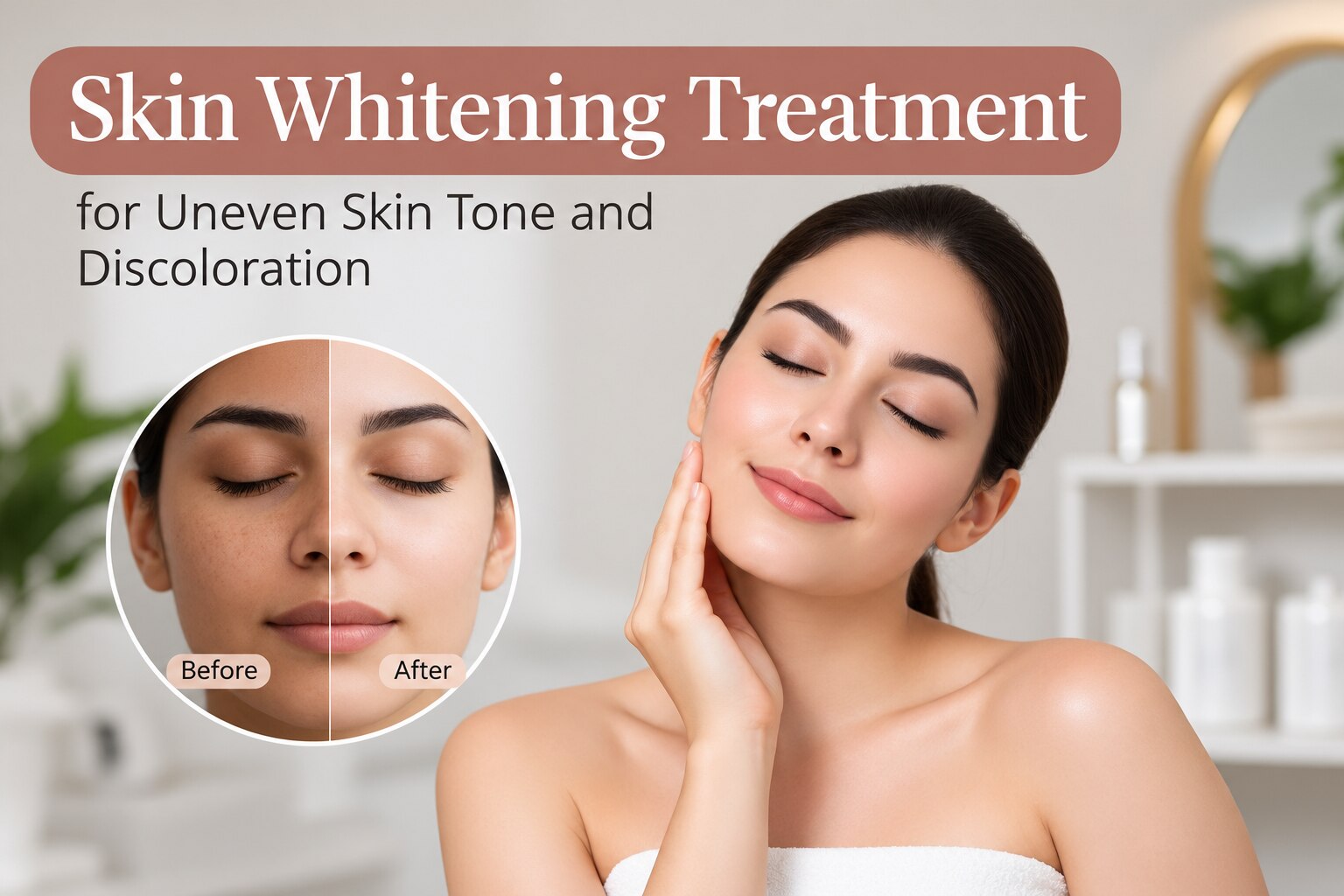
Uneven skin tone is a symptom, not a diagnosis. Brown or lighter patches may be post-inflammatory hyperpigmentation after acne, eczema, burns, waxing, picking or cosmetic procedures; acne marks often belong in this group. Other causes include melasma, freckles, solar lentigines (sunspots), friction-related darkening and medication-related pigmentation.
The pattern changes the treatment decision. Melasma often appears symmetrically on the cheeks, forehead or upper lip, while freckles and solar lentigines are separate spots linked to sun exposure. That distinction matters for freckles and sunspots treatment decision-making.
Vitiligo, an evolving mole or another skin condition can also look like a light or dark patch, so it needs examination rather than a bleaching regimen.
A clinician assesses the pigment’s:
- Shape, distribution and symmetry, including whether patches follow friction points or sun-exposed areas.
- Depth and borders, including whether pigment appears epidermal or deeper.
- Timing and triggers, including active acne or eczema, recent sun or heat exposure, waxing, procedures, irritation, pregnancy or breastfeeding, and every medication and supplement.
Ask: “What is my uneven skin tone diagnosis?” “What diagnosis is being treated?” “Is the pigment epidermal or deeper?” Also ask, “Should this suspicious or changing patch be examined before any peel?”
Control active inflammation, friction and repeated trauma first. Treating pigment while the trigger continues can create new marks, especially after a peel or other irritant treatment.
Compare Sunscreen and Topical Ingredients With Procedure-Based Treatment
Start with skincare: broad-spectrum sunscreen SPF 30 or higher, covering UVA and UVB, is part of pigment treatment—not an optional finishing step. Apply enough to cover your face, ears and neck; reapply after sweating or swimming, and add a hat or shade.
Tinted sunscreen with iron oxides provides visible-light protection, which matters for melasma and some deeper skin tones.
| Option | Main role | Trade-off |
|---|---|---|
| Azelaic acid | Acne-related marks and melasma | Can sting or irritate |
| Hydroquinone 2–4% | Professionally directed pigment-lightening course | Irritation; prolonged unsupervised use can cause exogenous ochronosis |
| Retinoids | Increase cell turnover and improve penetration | Dermatitis, peeling and darker post-inflammatory pigment |
| Vitamin C, kojic acid, niacinamide | Support tone-evening routines | Results depend on tolerability and consistent use |
| Chemical peel | Adds controlled irritation for selected pigment conditions | Not automatically stronger or better; irritation can worsen discoloration |
A consistent routine often needs weeks to months, so applying more product will not make results arrive safely faster. A peel can complement topicals after the diagnosis, skin barrier and active acne or eczema are assessed, but combining treatments without professional direction increases irritation.
Hydroquinone requires a defined course; retinoids are safer when introduced gradually, and azelaic acid is useful when hydroquinone is unsuitable.
Understand What a Chemical Peel Appointment and Peel Type Involve
A chemical peel appointment steps through cleansing, degreasing, protecting the lips, nostrils and other sensitive areas, applying the solution, observing contact time, and neutralizing it when the formula requires. The clinician then cools the skin and gives instructions for moisturiser, sunscreen, washing and peeling.
A consultation at DIVINE AESTHETICS in Mahalakshmi Layout can help assess preparation and aftercare before you choose a procedure.
Ask for these details before treatment:
- The active acids or ingredients, concentration, target depth and number of coats
- The expected peeling pattern, downtime and signs that need medical review
- Whether a test spot is appropriate for your skin tone and history of post-inflammatory hyperpigmentation
- How the peel fits your diagnosis, recent sun exposure, skin tone and any active acne, eczema or irritation
- Yellow Peel ingredients and downtime, rather than relying on the name
- A Black Peel comparison based on its actual formulation, not its colour or branding
Peel names do not reliably reveal strength. Use this comparison as a starting point:
| Option | What it means | Main trade-off |
|---|---|---|
| Superficial chemical peel | Targets the outer epidermis | Less downtime, but results may require several sessions |
| Stronger or deeper peel | Reaches further and creates greater injury | More redness, crusting, prolonged peeling and pigment-change risk |
| Yellow Peel or Black Peel | Branded or clinic-specific formulation | Ingredients and depth must be confirmed before treatment |
Related services
Yellow Peel Service Description from Divine Aesthetics At Divine Aesthetics, we proudly offer the transformative Yellow Peel, a cutting-edge chemical peel... View service → |
Pigmentation treatment At Divine Aesthetics, we offer advanced pigmentation treatments tailored to address various skin concerns, from sunspots and age spots to melasma and... View service → |
Plan Sessions, Recovery and the Risk of Making Pigment Worse
You may need one treatment or a planned series; there is no reliable universal number. The schedule depends on your diagnosis, peel depth, active ingredients, skin reactivity and whether acne or eczema is controlled. Superficial sessions are often separated by several weeks, not repeated while peeling, redness or barrier damage remains.
- Ask for the exact chemical peel sessions spacing before treatment, including the planned interval and follow-up date.
- Confirm the expected peel recovery timeline, including when peeling, redness and sunscreen use should end or change.
- Ask when results will be judged. Superficial post-inflammatory marks can take several weeks to months to fade; melasma, deeper pigment and recurrent discoloration take longer and require melasma maintenance.
Pause irritating products only as directed. Do not pick or scrub peeling skin; use a bland moisturiser and daily broad-spectrum sunscreen. Delay waxing, threading and other irritating procedures until the skin barrier has recovered.
Aggressive peels, intense pulsed light and lasers can cause burns, prolonged redness, darker patches or texture change. The post-inflammatory hyperpigmentation risk is higher if your skin tans readily, you have had dark marks after injury, or treatment targets active inflammation. Do not treat active acne, eczema, infection or recently irritated skin; control the trigger first.
Conservative settings and a test spot can reduce risk when appropriate.
Recognise Unsafe Whitening Claims and Know When to Reassess
Treatment can reduce excess melanin and discoloration, but no safe skin whitening treatment permanently changes your natural baseline skin colour. Reject rapid or permanent-whitening promises. Avoid unlabeled products and packs without a complete ingredient list: mercury in whitening creams can damage the kidneys and nervous system, while undisclosed corticosteroids can injure facial skin.
| Warning sign | Why it matters | What to do |
|---|---|---|
| Rapid or permanent-whitening promise | The claim is unsafe and unrealistic | Do not use the product |
| Missing label or incomplete ingredients | Adulteration cannot be checked | Avoid it |
| “Triple” cream sold without prescription guidance | Triple combination cream risks include steroid damage and rebound | Request a defined course and follow-up |
A prescription triple cream combines hydroquinone, a retinoid and a corticosteroid. Use it only for the prescribed duration; prolonged facial steroid exposure can cause thinning, acne-like eruptions, visible vessels and rebound darkening. Oral injectable glutathione evidence does not establish it as a first-line option, and injections add sterility, dosing, quality and adverse-effect concerns.
Stop treatment and seek evaluation for severe burning, swelling, blistering, infection, persistent redness or blue-gray discoloration. If pigment does not improve, reassess the diagnosis, sunscreen use, adherence, irritation, medication triggers and ongoing inflammation before escalating.
Melasma commonly relapses after sun, visible-light, hormone or heat exposure. Continue sun protection and a tolerable maintenance regimen after the skin clears.
Frequently asked questions
How do you identify the type of skin discoloration before treatment?
Brown or lighter patches can result from post-inflammatory hyperpigmentation, melasma, freckles, solar lentigines, friction, or medication-related pigmentation. A clinician should assess the pattern, trigger, duration, and skin history before recommending treatment.
How do sunscreen, topical ingredients, and procedures compare for uneven skin tone?
Daily broad-spectrum sunscreen helps prevent existing pigmentation from darkening. Topical ingredients target pigment over time, while procedures such as chemical peels can provide a more intensive treatment but carry recovery and irritation risks.
What happens during a chemical peel appointment?
The appointment includes a skin assessment, preparation, selection of a peel type and strength, controlled application, removal or neutralisation when required, and aftercare instructions. The peel should match your diagnosis, skin sensitivity, and treatment goals.
How should you plan sessions and recovery after pigmentation treatment?
Follow the recommended spacing between sessions, protect treated skin from ultraviolet exposure, avoid picking or irritating peeling skin, and use the prescribed aftercare. Reassess if redness, pain, blistering, or darker pigmentation develops.
Which skin whitening claims are unsafe?
Be cautious of products promising permanent whitening, instant results, or a specific number of shades lighter without discussing risks. Avoid unlabelled creams and products containing undisclosed corticosteroids, mercury, or hydroquinone without medical supervision.
Related services
Acne marks treatment At Divine Aesthetics, we specialize in providing advanced and comprehensive treatments to effectively reduce and eliminate acne marks, helping you... View service → |
Black Peel Divine Aesthetics: Black Peel Service At Divine Aesthetics, we are proud to offer our specialized Black Peel treatment, designed to rejuvenate and... View service → |
Chemical Peel At Divine Aesthetics, our Chemical Peel service offers a rejuvenating and transformative skincare experience designed to enhance your natural beauty. View service → |
Acne treatment At Divine Aesthetics, we offer comprehensive acne treatment services designed to address both the symptoms and root causes of acne, providing you... View service → |